


WELCOME!
We know school is serious business, but cognitive science tells us our brains can’t learn unless we feel safe, interested, and intrigued. That’s why we’re making JAMs. Unlike ordinary programming that regards literacy and engagement as separate concepts, JAMs meet in the middle to make reading and writing a blast. JAMs are 50-minute “task conflicts” that hinge on skilled reading, healthy dialogue, and collaborative problem solving. Stacked by schema and organized by standard, JAMs can be played as stand-alone activities, or spiraled between BRAVE board games for serious fun. Making class time sweeter than honey.






How Do You Play a JAM ?
Each JAM has an optional Pre-Game Warmup that presents a unique schema, embedded vocabulary & reflections to frame learning ahead of a JAM. Highly recommended, not essential. Download & print.
BOOKLET
Each JAM has an optional Pre-Game Warmup that presents a unique schema, embedded vocabulary & reflections to frame learning ahead of a JAM. Highly recommended, not essential. Download & print.
ENGAGE
The hook is a quick quote, idea or brain teaser that piques interest the minute before a JAM begins. Found on the first page of each 16 pp.
SETUP
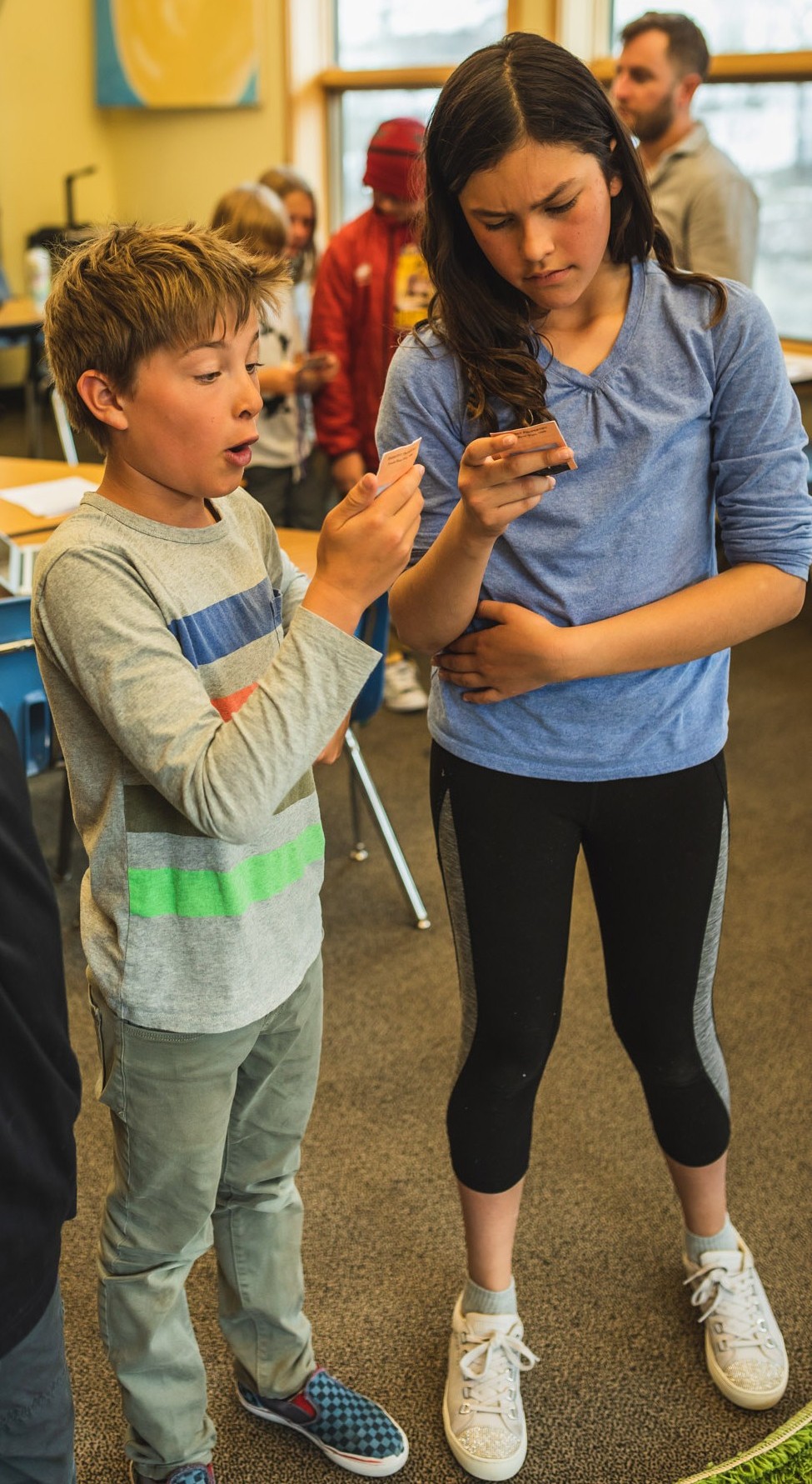
Teachers organize their class into small groups, 4 or 5. Next, deliver 1 page/role/student.
EXPLORE
Individual group members read and annotate their unique viewpoint.
EXPLAIN
Each small group collaborates to layer viewpoints based on key questions: Who, What, Where, When & Why.
ELABORATE
Large group reconvenes to clarify key points, found in Guiding Questions.
EVALUATE
Small groups reassemble to complete graphic organizers & timelines. Plus, diagnose the embedded conflict.
EXTENSIONS
(6) extensions, labeled B-G, provide structured journaling, retrieval practice, interleaving, analysis, and more!
JAM Series